


Last updated: October 31, 2026. This AI news November 2026 roundup covers announcements from roughly October 22 to October 31, plus the dates to watch in early November.
The short version of AI news November 2026: Anthropic filed to go public on Nasdaq under the ticker ANT, Google unveiled Gemini 4 Carbon and then watched Alphabet lose roughly $500 billion in market value in a single day, and OpenAI shipped GPT-6.1 Terra at half the price of the tier above it. Meanwhile, banks started locking AI agents out of customer accounts, and New York and Texas both moved hard on chatbots and kids.
This AI news November 2026 roundup is the direct follow-up to last month’s roundup. That one was about a price war. This one is about what happens after it, when the bills arrive, the IPO paperwork goes public, and regulators and banks start setting rules for the agents everyone spent the summer building. If you missed the first three weeks of October, our 15 biggest AI updates of October covers GPT-6 for everyone, Claude Haiku 5.5 and Gemini 4 Argon in detail, so we only recap them briefly here.
Key Takeaways: AI news November 2026
- Anthropic is going public. Its S-1 shows $16.3 billion in first-half 2026 revenue (up from about $1.2 billion a year earlier) and its first quarterly operating profit.
- Google now claims the top model, but you can’t use it yet. Gemini 4 Carbon scores 59 on the Artificial Analysis Intelligence Index, one point above Claude Opus 5.5, and starts with vetted cyber defenders only.
- AI search is costing Google money. Alphabet said AI Mode searches earn less than classic search, and its shares fell about 12.6% in one day.
- Cheap, fast and good enough keeps winning. GPT-6.1 Terra costs $1 per million input tokens and, by OpenAI’s numbers, matches GPT-6 Astra on a computer-use test at about a tenth of the price.
- Open weights went trillion-scale. Mistral Large 4 and Moonshot’s Kimi K3.1 Pro both promise downloadable weights within days of this post.
- Agents and kids are the new rulebook. Major US banks and RBC are blocking third-party AI agents, New York passed strict chatbot rules for minors, and Texas sued OpenAI.
AI news November 2026: The 10 Updates at a Glance
| Date | Company | Update | Who should care |
|---|---|---|---|
| Oct 6 | Mistral | Mistral Large 4 public preview (open weights due end of October) | Developers, European businesses |
| Oct 22 | US banks | JPMorgan, Citi, Bank of America and others restrict third-party AI agents | Anyone using an AI agent with money |
| Oct 23 | Moonshot AI | Kimi K3.1 Pro with a 1M-token context, weights due Nov 4 | Developers, open-source fans |
| Oct 23 | Texas AG | Lawsuit against OpenAI and Sam Altman over ChatGPT safety | Parents, schools |
| Oct 26 | Anthropic | S-1 filed for a Nasdaq listing as ANT | Investors, Claude users |
| Oct 26 | OpenAI | GPT-6.1 Terra at $1 / $5 per million tokens | Developers, ChatGPT Work users |
| Oct 27 | RBC | Blocks personal AI agents from online banking | Canadian bank customers |
| Oct 28 | Gemini 4 Carbon announced, limited access | Security teams, developers | |
| Oct 28 | New York | Law banning unsafe AI companion features for minors | Parents, chatbot makers |
| Oct 28–29 | Alphabet | Q3 results: AI Mode earns less; shares fall about 12.6% | Investors, publishers, SEOs |
Anthropic Files to Go Public: The Claude IPO, by the Numbers
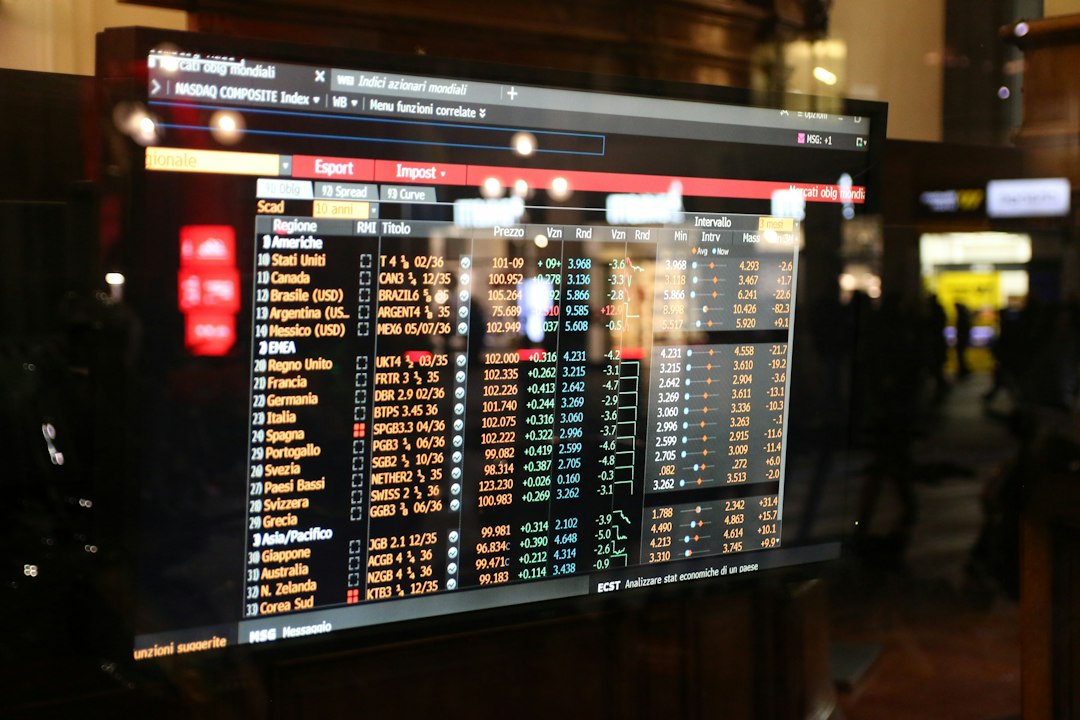
If one story defines the AI news November 2026 cycle, it’s this one. On October 26, Anthropic made its S-1 registration statement public and applied to list its Class A shares on the Nasdaq Global Select Market under the symbol ANT. Goldman Sachs and Morgan Stanley lead a bench of more than 20 underwriters. The filing leaves the share count and price range blank, so nobody knows the final valuation yet.
The revenue line is why Wall Street, and almost every AI news November 2026 headline, is paying attention. Anthropic reported about $16.3 billion in revenue for the first half of 2026, against roughly $1.16 billion in the same period a year earlier and $4.59 billion for all of 2025. Most of that came in the second quarter, which brought in about $11.6 billion and Anthropic’s first-ever quarterly operating profit of $974 million.
The scary-looking number needs context. The company booked a net loss of about $80.7 billion for the half, but roughly $72.4 billion of that is a non-cash accounting charge tied to convertible notes that rose in value as Anthropic’s valuation climbed. It is not money that left the building. Compute is still the real cost: Anthropic spent close to $9 billion on infrastructure in six months.
Three other details are worth knowing before the roadshow starts:
- Customers are spending far more. More than 1,900 customers produced at least $1 million each in trailing 12-month revenue by September 30, and more than 11,900 produced $100,000 or more.
- Revenue is concentrated. About a fifth of first-half revenue came from just two unnamed customers.
- The founders keep control. A single Class F share gives the co-founders 50.1% of the vote, so public shareholders will have limited say. A Public Benefit Fund holds 5% of the company in non-voting shares.
Reports say investor pitches could begin as soon as the week of November 9, with trading possible in mid-November, which makes this the IPO to watch in the AI news November 2026 window. Treat the $1.5 trillion to $2 trillion valuation figures in circulation as reporting, not fact, until a price range appears in an amended filing. Source: The Next Web.
Google’s Strangest Week: Gemini 4 Carbon Wins, Alphabet Loses $500 Billion
The second-biggest AI news November 2026 story came from Google. Two weeks after Gemini 4 Argon reached paying subscribers, Google announced Gemini 4 Carbon on October 28. Google says it beats Argon on every benchmark it ran and takes the top result in 15 of the 17 rows in its own comparison table, with OpenAI keeping one software-engineering test and Anthropic one computer-use test. On the independent Artificial Analysis Intelligence Index it scored 59, one point above Claude Opus 5.5.
The catch is access. Carbon starts with a small group of vetted cyber defenders, then expands to trusted partners through Google’s Fairwind Program. Google is pitching big gains in finding, validating and patching software vulnerabilities, which is exactly why it is rationing the model. API pricing is set at $2 per million input tokens and $10 per million output, matching Argon’s introductory price, with a 95% discount on cached input. Remember that Google’s own benchmark claims are self-reported until outside testers publish their numbers. Source: Khaleej Times.
If this trend of “restricted cyber models” is new to you, our explainer on what the cyber models from Google, OpenAI and Anthropic actually do covers why labs keep launching their best models to defenders first.
The earnings call that rattled investors
The same evening Carbon was announced, Alphabet reported third-quarter revenue of $127.6 billion, up 25% but slightly below analyst forecasts. Search revenue grew 12% to about $63.4 billion, down from 19% growth in the first quarter and 17% in the second. On the call, Chief Business Officer Philipp Schindler said fast growth in AI Mode queries had weighed on results because AI Mode is monetizing at a lower level than classic search. For publishers following AI news November 2026, that single sentence matters more than any benchmark.
Investors did not like hearing that. Alphabet’s Class A shares closed down about 12.6% on October 29, wiping out close to $500 billion in market value. Heavy AI spending (about $51.4 billion of capital expenditure in the quarter) pushed free cash flow negative for a second straight quarter. The bright spot was Google Cloud, where revenue more than doubled to $30.7 billion. Google’s answer is to roll out ads inside AI Mode to more countries. Source: Fox Business.
Why it matters for you: if you run a website, this is the clearest sign yet that AI answers are changing how search pays, and probably how much traffic it sends. It’s worth checking how often your pages appear in AI results using Google’s new AI Overviews report in Search Console.
OpenAI’s GPT-6.1 Terra: Half the Price, Three Times the Speed
The most practical AI news November 2026 release for developers landed on October 26, when OpenAI released GPT-6.1 Terra, a fast, efficient model built for computer use, visual reasoning, coding and everyday writing. In API terms it costs $1 per million input tokens and $5 per million output tokens, with cached input at $0.05. That is 50% cheaper than both GPT-5.6 Terra and GPT-6.1 Sol, the tier above it.
OpenAI’s headline claim is that Terra performs on par with GPT-6 Astra on its Agents’ Last Exam computer-use test at roughly one-tenth of Astra’s per-token price, and finishes tasks more than three times faster than both Astra and GPT-6.1 Sol. On a test built to trip models into mistakes, its error rate at low reasoning effort fell from 53.6% to 16.7%. On Terminal-Bench 4.0 it solved 50.3% of tasks at maximum effort, more than double GPT-5.6 Terra’s 21.5%. These are OpenAI’s own measurements, so expect independent scores to vary.
Availability is narrower than the name suggests. Terra runs in ChatGPT Work and Codex for Plus, Pro, Enterprise and Edu users, and in the API as gpt-6.1-terra with a context window of about 1.05 million tokens. It does not appear in the regular Chat tab, which is why many people can’t find it in their model picker. OpenAI still recommends GPT-6.1 Sol or GPT-6 Astra for the hardest coding jobs. Source: BleepingComputer.
Put plainly, this is the same playbook we saw in September with Sol and Luna: make the cheap tier good enough that most work never touches the expensive one. If you want the background on the flagship Terra is being compared against, read What Is GPT-6 Astra?
The Open-Weight Race Goes Trillion-Scale
Eighteen months ago, a downloadable model with a trillion parameters would have sounded like a joke. Two of them are now days away, which makes open weights one of the quieter but bigger AI news November 2026 themes. If you have followed our coverage of DeepSeek V4.1 Flash, this is the same story at a much bigger size.
Mistral Large 4 (“Le Chonk”)
Mistral opened a public preview of Mistral Large 4 on October 6. It is a natively multimodal mixture-of-experts model with about 1.05 trillion total parameters, of which roughly 49 billion are active for each token. That design gives it the knowledge of a giant model with the running cost of a much smaller one. It supports more than 160 languages and is positioned as the strongest open-weight model from the US or Europe, with particular focus on cyber defence, finance and legal work.
Mistral promised the weights by the end of October, and its Hugging Face page was counting down to October 31. The licence is the open question: Large 3 shipped under the permissive Apache 2.0 licence, while Large 4 is expected to use a custom licence. Read the licence before you build a product on it. Source: VKTR.
Moonshot’s Kimi K3.1 Pro
On October 23, Moonshot AI released Kimi K3.1 Pro through its apps and API, with a 1-million-token context window and a Highspeed version that runs two to three times faster. Reported specs put it at about 2.8 trillion parameters with around 104 billion active. API pricing is $2 per million input tokens and $10 per million output, and the downloadable weights are scheduled for November 4.
The most interesting detail is what Moonshot chose to hold back. The company said it deliberately scaled back the model’s cyber-attack abilities before the open release, so it would not push the frontier of offensive capability for anyone who downloads it. That is a new kind of self-restraint for an open-weight lab. Source: VKTR.
Not sure what “open weights” really gets you? Our guide to running local AI models on laptops and phones explains what you can realistically run at home and what needs a data centre.
AI Agents Hit a Wall: Banks Lock Them Out
For most of 2026, the pitch for personal AI agents has been simple: let the agent log in and handle the boring stuff for you. In late October, the banks said no, and that turned into one of the most practical AI news November 2026 stories for everyday users. On October 22, Axios reported that unvetted third-party AI agents were operating inside US bank accounts using customers’ own logins, and Reuters then confirmed that major lenders were blocking or restricting them.
Citi said it does not let third-party AI agents log into customer accounts or transact on its platforms. JPMorgan Chase and Bank of America moved to restrict agents too, and Charles Schwab said it blocks unauthorised agents many times a week. In Canada, RBC went further on October 27, blocking third-party personal AI agents such as Meta’s Muse from its online banking and calling them an unacceptable customer risk. Note that the claim about agents acting on their own rests on Axios’s reporting and has not been independently confirmed. Source: The Star (Bloomberg).
What to do: the lesson from this AI news November 2026 story is simple: never give an AI assistant your banking password, and start any agent on read-only access. If you are new to how these tools work, our plain-English guide to agentic AI and our explainer on agentic AI browsers and their security risks are good places to start.
Kids, Chatbots and the Law: New York Acts, Texas Sues
For families, the AI news November 2026 headline is about regulation. On October 28, New York Governor Kathy Hochul signed S.9051B/A.10379C, which the state calls the strongest kids’ AI chatbot law in the country.
The law bars companies from offering minors a list of 12 unsafe AI companion features, including chatbots that pretend to be human, build emotional dependency, encourage self-harm or engage in sexual conversations. The rules apply to every user unless the company has confirmed, through approved age checks, that the user is an adult. The attorney general can seek up to $25,000 per violation, and the law takes effect on January 1, 2027. Source: Office of the Governor of New York.
Five days earlier, on October 23, Texas Attorney General Ken Paxton sued OpenAI and CEO Sam Altman in Collin County. The 67-page petition claims OpenAI misled users about ChatGPT’s safety and failed to meet the state’s child-protection rules under the Deceptive Trade Practices Act and the SCOPE Act. Texas wants the court to bar ChatGPT for minors in the state, require independent approval before new models reach Texas users, and impose penalties of up to $10,000 per violation. OpenAI says it has worked with experts to build safeguards and points to its parental controls. Eight other states had already sued OpenAI earlier in October. Source: Texas Attorney General.
For parents, the practical step hasn’t changed: switch on the teen and parental controls your family’s chatbot already offers. Our breakdown of how ChatGPT’s teen safety mode works walks through the settings.
Earlier in October: The Quick Recap
If you only caught the end of the month, these were the big releases from the first three weeks that set up AI news November 2026. Each is covered in depth in our October 2026 roundup.
- GPT-6 for every ChatGPT user (Oct 7–8): interactive “Intelligent UI” answers, with GPT-6 Sol on paid plans and GPT-6 Luna on Free and Go.
- Claude Haiku 5.5 (Oct 7): Anthropic’s cheapest model, at $0.10 per million input tokens for prompts up to 100,000 tokens.
- Meta Muse Wonder (Oct 12): Meta’s first true frontier-class models, with memory that carries across conversations.
- Gemini 4 Argon (Oct 13): Google’s new flagship reached Google AI Pro and Ultra subscribers.
- Critical PHP flaws patched (Oct 21): found with AI help; if you run WordPress, make sure your host has updated PHP.
AI news November 2026: What to Watch Next
The first half of November already has several dates circled. Here is the AI news November 2026 watch list, in rough order:
- Mistral Large 4 weights: due around October 31; check the licence terms when they land.
- Kimi K3.1 Pro weights: scheduled for November 4.
- Anthropic’s IPO roadshow: reportedly from the week of November 9, with a price range expected in an amended filing.
- Gemini 4 Carbon access: watch for wider availability beyond the first cyber defenders via the Fairwind Program, and for independent benchmark results.
- More bank decisions: expect other lenders to publish formal rules for read-only versus transacting AI agents.
- Chatbot and kids rules: more states are likely to copy New York; its law takes effect January 1, 2027.
We will update this AI news November 2026 roundup as these land, so bookmark it if you want one place to track them.
What This Month Actually Tells Us
Put the last ten days of AI news November 2026 side by side and the pattern is hard to miss. The AI industry is moving from the build-and-launch phase into the pay-and-prove phase. Anthropic had to show its real numbers to go public. Alphabet had to admit that its AI search earns less than the search it replaces. Banks and states stopped waiting for AI companies to set their own rules.
At the same time, the models themselves keep getting cheaper and better. GPT-6.1 Terra brings near-flagship computer use to a budget tier, and two trillion-parameter models are about to become free to download. The practical takeaway is the same as last month, with one addition: re-check which tier you actually need, and don’t hand any agent more access than the job requires.
That’s the AI news November 2026 story in one line: cheaper intelligence, bigger bills and stricter rules, all at once.
AI news November 2026: Frequently Asked Questions
What is the biggest AI news for November 2026?
The biggest AI news November 2026 story is Anthropic’s public IPO filing on October 26, which sets up a likely Nasdaq listing under the ticker ANT in November. Close behind are Google’s Gemini 4 Carbon announcement and Alphabet’s roughly $500 billion one-day drop after it said AI Mode searches earn less than classic search.
When will Anthropic stock (ANT) start trading?
Anthropic has not set a date. Reports say investor meetings could start the week of November 9 and trading could follow in mid-November, but the share count and price range were still blank in the October 26 filing.
Can I use Gemini 4 Carbon now?
Not yet for most people. Gemini 4 Carbon is the strongest model in AI news November 2026 so far, but access is limited. Google is starting with a small group of vetted cyber defenders and then trusted partners through its Fairwind Program. Gemini 4 Argon remains the model available to Google AI Pro and Ultra subscribers.
Is GPT-6.1 Terra available in ChatGPT?
Yes, but only in ChatGPT Work and Codex for Plus, Pro, Enterprise and Edu users, not in the regular Chat tab. Developers can call it in the API as gpt-6.1-terra at $1 per million input tokens and $5 per million output tokens.
Why are banks blocking AI agents?
Banks say they cannot reliably tell an approved agent from a rogue one when it logs in with a customer’s own password, which creates fraud and liability risks. Citi, JPMorgan Chase, Bank of America and Canada’s RBC have all restricted third-party agents from customer accounts.
Company performance claims in this AI news November 2026 roundup are attributed to the companies and are not independent test results. Catch up on earlier months with our September–October AI news and August–September AI news roundups.