
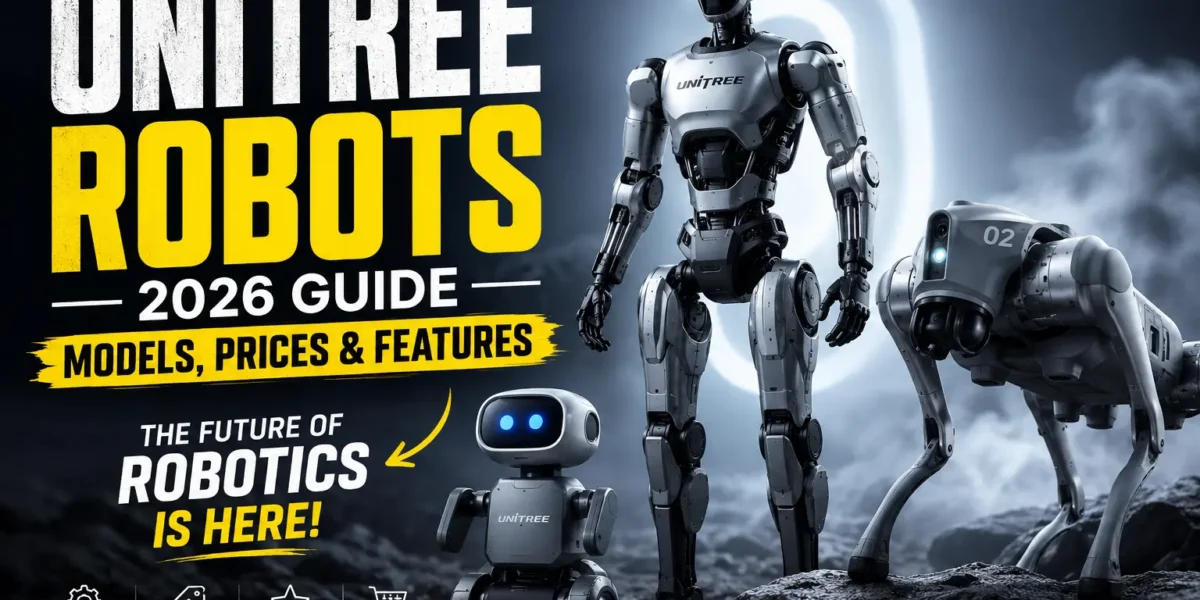
The eight dancing robots that left Simon Cowell speechless on America’s Got Talent this year aren’t just a viral audition — they’re built by a company that just priced one of 2026’s biggest robotics IPOs. Unitree Robotics, the Chinese firm behind the G1 humanoid dance crew, listed on Shanghai’s STAR Market on August 19 at a valuation of roughly 61 billion yuan (about $9 billion), after its IPO was massively oversubscribed.
Key takeaways
- The AGT dance crew are Unitree’s G1 humanoid robots — eight of them performed synchronized choreography, including acrobatic somersaults, alongside dancer Wu Yufei in the Season 21 premiere.
- Unitree priced its Shanghai STAR Market IPO at 150.8 yuan per share, valuing the company at about 61 billion yuan (~$9B) — well above earlier filing estimates of roughly 42 billion yuan.
- The company is genuinely profitable: 1.7 billion yuan in 2025 revenue with 591 million yuan in adjusted profit — rare in humanoid robotics, where rivals like UBTech posted heavy losses.
- But Q1 2026 adjusted profit fell more than 52%, even as revenue grew 68%, as R&D and sales spending ramped up — a sign investors are pricing in future growth, not just current earnings.
- Unitree now competes in a crowded field that includes Tesla’s Optimus, Figure, 1X, and UBTech — its edge so far has been shipping robots that actually generate revenue today.
The performance that went viral
On the Season 21 premiere of America’s Got Talent, eight Unitree G1 robots performed a synchronized dance routine to a Lady Gaga track, mixing precise choreography with acrobatic somersaults. The routine earned unanimous approval from the judges and sent the act through to the next round — and sent clips of dancing humanoid robots across social media within hours.
Here’s the audition that started it:
Unitree confirmed to reporters that the performers were its G1 model — the same lower-cost humanoid robot line the company has been selling to researchers, universities, and increasingly commercial customers. The timing wasn’t a coincidence either: the AGT appearance landed right as Unitree was in the middle of filing for its IPO, seeking to raise 4.2 billion yuan for robotics development and manufacturing.
The IPO, by the numbers
Unitree’s listing on Shanghai’s STAR Market (China’s Nasdaq-style board for tech companies) priced at 150.8 yuan per share, implying a valuation near 61 billion yuan — a notable jump from the roughly 42 billion yuan implied by its initial filing range. Demand was intense enough that the offering was reported to be oversubscribed thousands of times over.
What makes Unitree stand out from most humanoid robot makers is that it’s already profitable: 1.7 billion yuan in 2025 revenue and 591 million yuan in adjusted profit. Compare that to UBTech, a rival Chinese humanoid robot maker that posted roughly 700 million yuan in losses over the same period, and it’s clear why investors have been willing to pay up.
The catch: Unitree’s Q1 2026 adjusted profit dropped more than 52% year-over-year, even though revenue grew 68%. That’s a company spending aggressively on R&D and sales to capture a market that mostly doesn’t exist yet at scale — a bet that commercial demand for humanoid robots will catch up to the valuation, not proof that it already has.
Why this matters beyond one company’s stock
Unitree going public is a signal for the whole humanoid robotics race, which also includes the same AI cost-cutting dynamics reshaping the software side of AI: as the underlying AI models that power robot perception and control get cheaper and more capable, the hardware makers building on top of them can move faster too. A humanoid robot dance crew clearing “acrobatic somersaults” live on network TV would have been unthinkable a few years ago — now it’s a marketing moment for a company that’s also filing real, audited financials with real revenue.
It also puts a public, tradeable price tag on a technology race that’s been mostly private-market speculation until now — Tesla’s Optimus, Figure, and 1X are all still private, which makes Unitree’s STAR Market debut one of the first real public data points on how markets value humanoid robotics as a business, not just a demo.
What to watch next
- Whether commercial orders catch up to the valuation. Unitree’s falling Q1 profit margin, even with strong revenue growth, is the number to track over the next few quarters.
- How competitors respond. Tesla, Figure, and 1X are all racing toward their own commercial humanoid robot deployments; a successful Unitree IPO raises the pressure on all of them to show real revenue, not just demos.
- More AGT-style public moments. Expect more highly produced demonstrations from every humanoid robotics company now that Unitree has shown how much attention — and goodwill — a viral dance routine can generate.
Frequently asked questions
Which robots danced on America’s Got Talent?
Eight Unitree G1 humanoid robots performed the routine, confirmed by Unitree itself, dancing alongside a human performer in the Season 21 premiere.
What is Unitree’s IPO valuation?
Unitree priced its Shanghai STAR Market IPO at 150.8 yuan per share, implying a valuation of roughly 61 billion yuan (about $9 billion USD).
Is Unitree profitable?
Yes, for full-year 2025 — 1.7 billion yuan revenue and 591 million yuan in adjusted profit. However, its Q1 2026 adjusted profit fell more than 52% year-over-year despite 68% revenue growth, as spending increased.
Who are Unitree’s main competitors?
Tesla’s Optimus, Figure, 1X, and fellow Chinese humanoid robot maker UBTech are the most commonly cited competitors, though none of the others are publicly traded yet.
Can I buy Unitree stock?
Unitree trades on the Shanghai Stock Exchange’s STAR Market, which has restrictions on foreign retail investor access; buying shares typically requires a broker with Shanghai exchange access rather than a standard US brokerage account. This isn’t investment advice — check with a licensed broker or financial advisor about what’s actually available to you.
Sources: Global Times, Remio.ai IPO pricing analysis.