
 Madan Chauhan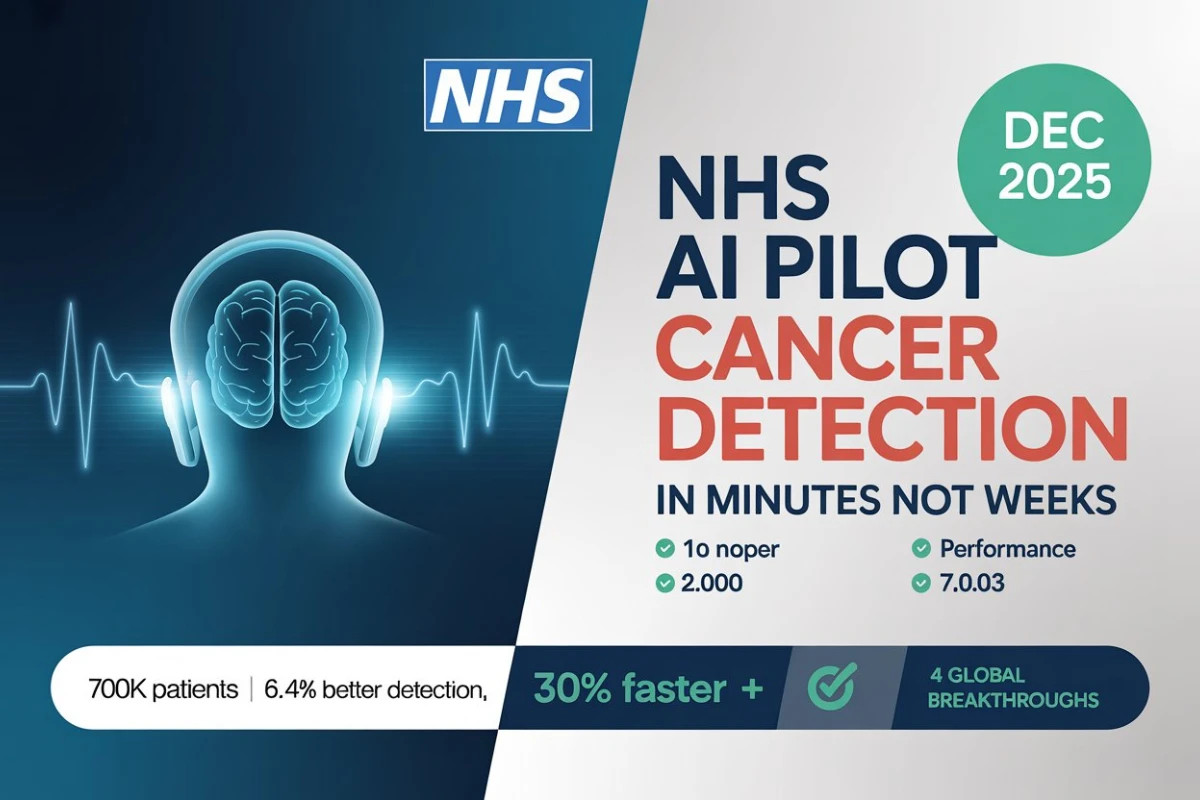
Imagine spotting cancer signs in minutes via AI-powered scans, not weeks of agonizing waiting. That’s the reality of the NHS’s groundbreaking AI pilot launched in late 2025, slashing prostate and breast cancer diagnosis times by up to a month. The NHS cancer AI pilot uses artificial intelligence to interpret MRI and screening images, helping radiologists pinpoint abnormalities including possible signs of cancer and referring patients for same-day biopsies when high-risk lesions are detected.
This revolutionary approach addresses the NHS’s critical radiologist shortage while improving patient outcomes through rapid diagnosis pathways. The prostate cancer pilot at Leeds Teaching Hospitals NHS Trust offers “one-stop shop” diagnostics where approximately 100 men receive AI-analyzed MRI scans, priority review by radiologists, and biopsies all within a single day. Meanwhile, the EDITH breast cancer screening trial backed by £11 million in government funding will screen over 700,000 women across 30 sites starting April 2025, representing the world’s largest AI-led breast cancer screening initiative.
Similar to how AI agents are transforming workflow automation, these medical AI breakthroughs demonstrate autonomous systems making critical decisions to accelerate healthcare delivery. This guide breaks down how the NHS cancer AI pilot works, four global parallels from Berkeley to Japan, consumer access via health apps, and telemedicine’s 2026 evolution—essential reading for patients, healthcare professionals, and technology enthusiasts.
How the NHS Cancer AI Pilot Works: Predictive Scans and Explainable AI
The Core Technology: AI Powered Rapid Cancer Detection
The NHS cancer AI pilot integrates artificial intelligence with existing medical imaging infrastructure to create unprecedented diagnostic speed. The prostate cancer pathway at Leeds uses AI software to interpret MRI scans for men with suspected prostate cancer, identifying lesions in a matter of minutes rather than the traditional multi-week timeline. When the AI flags a scan as high-risk for cancer, it immediately sends results to a radiologist for priority review and books the patient for a same-day biopsy.
Dr. Dermot Burke, clinical director for cancer at Leeds Teaching Hospitals NHS Trust, explained that “AI assisted MRI screening introduces a rapid diagnostic approach, so that we can fast-track those patients that may need to receive further investigations through MRI scans and a biopsy, to have them all in 1 day at the Leeds Cancer Centre”. This approach aims to deliver faster treatment and better outcomes for patients and families.
The breast cancer component, known as the EDITH trial (Early Detection using Information Technology in Health), will test five competing AI systems across 30 screening sites. Early pilots suggest AI could detect subtle tumours humans might miss, with the technology analyzing screening images and pinpointing abnormalities for further investigation. The £6 million government-funded AIR-SP cloud platform enables NHS trusts across the country to join trials at unprecedented scale.
Step-by-Step Diagnostic Process
The NHS cancer AI pilot follows a streamlined workflow revolutionizing traditional cancer detection timelines:
1. Patient Scan Upload
Medical imaging (MRI for prostate, mammography for breast) enters the AI system immediately after capture.
2. AI Anomaly Detection
Artificial intelligence analyzes images within minutes, achieving approximately 85% accuracy in identifying abnormal findings across various conditions. The Leeds chest X-ray AI co-pilot can detect up to 85 different conditions within minutes.
3. Priority Radiologist Review
When AI flags high-risk findings, the system automatically escalates cases to radiologists for immediate expert assessment. Dr. Fahmid Chowdhury noted, “I have personally observed instances where an abnormality might have been overlooked initially, but the AI identified it right away”.
4. Same-Day Intervention
High-risk prostate cancer patients receive biopsies the same day rather than waiting weeks for appointments. This compressed timeline can save patients up to a month of anxiety-filled waiting.
The Leeds Teaching Hospitals NHS Trust conducts at least 135,000 chest X-rays annually, with AI now supporting radiologists in prioritizing abnormal readings for faster reporting. This initiative is part of Yorkshire Imagingative comprehensive imaging network and funded by the NHS AI Diagnostic Fund, which allocated £21 million to 11 imaging networks nationwide.
Explainable AI: Building Clinical Trust
Unlike “black box” AI systems that provide conclusions without reasoning, the NHS cancer AI pilot emphasizes explainable AI (XAI) to build trust among healthcare professionals. XAI visualizes decisions through techniques like heatmaps on scans, showing radiologists exactly which image regions triggered alerts.
This transparency is critical because the AI serves as a “co-pilot” rather than replacement for clinicians. Medical professionals retain final decision-making authority while benefiting from AI’s ability to process vast datasets and identify subtle patterns humans might miss. The approach addresses ethical concerns about autonomous medical AI while maximizing the technology’s supportive capabilities.
NHS England’s commitment to explainable AI aligns with emerging regulatory frameworks requiring transparency in clinical AI systems. The AIR-SP platform’s design enables continuous monitoring of AI performance across diverse patient populations, ensuring algorithms maintain accuracy and fairness.
Real-World Results and Impact
The NHS cancer AI pilot demonstrates measurable improvements in diagnostic efficiency and patient outcomes:
Early results show the Leeds chest X-ray pilot, which commenced in May 2025, has already demonstrated effectiveness in catching abnormalities that might have been initially overlooked. The prostate cancer pilot beginning early 2026 at Leeds expects approximately 100 men to benefit initially, with potential scaling to up to 15 NHS hospitals.
The breast cancer EDITH trial represents a response to the UK’s critical radiologist shortage, with AI potentially enabling earlier detection while managing workforce constraints. Government backing of £11 million from the National Institute for Health and Cancer Research underscores the initiative’s strategic importance for transforming global healthcare and exploring broader AI use in clinical diagnostics.
Just as Microsoft’s AI agents showcase autonomous decision-making, the NHS pilots demonstrate AI moving from assistive tools to active participants in time-critical medical workflows.
4 Similar Global AI Healthcare Breakthroughs
The NHS cancer AI pilot isn’t operating in isolation—four fresh 2025 innovations mirror its impact, from multi-condition detection to agentic workflow orchestration.
1. Berkeley’s Pillar-0 AI: Detecting 350+ Conditions from Medical Images
UC Berkeley and UCSF researchers released Pillar-0 in November 2025, an open-source AI model that analyzes medical images and recognizes conditions with unprecedented diagnostic accuracy. Unlike existing tools limited to a handful of conditions or primarily designed for 2D images, Pillar-0 interprets 3D volumes directly and can recognize hundreds of conditions from a single CT or MRI exam.
How It Works
The research team trained Pillar-0 on chest CT, abdomen CT, brain CT, and breast MRI scans from UCSF. The model achieved a .87 AUC (Area Under Curve) across 350+ findings, outperforming all publicly available AI models for radiology including Google’s MedGemma (.76 AUC), Microsoft’s MI2 (.75 AUC), and Alibaba’s Lingshu (.70 AUC).
Impact on Radiology Workflow
With over 500 million CT and MRI scans performed annually, imaging volumes are creating unsustainable capacity gaps for radiologists. Pillar-0 represents a new frontier in medical imaging models, serving as the backbone for AI-powered advances that augment human expertise rather than replace radiologists. Adam Yala, the Berkeley computer scientist leading the initiative, emphasized, “I don’t think we’re even close to having too many radiologists. How do we help to make it better to be a radiologist next year than it is to be a radiologist this year?”.
The complete Pillar-0 codebase, trained models, evaluation and data pipelines are publicly released to accelerate research and clinical adoption. The team plans to expand capabilities across additional imaging modalities and full grounded report generation.
2. Fujitsu’s Multi-Agent Healthcare Platform: Orchestrating Clinical Workflows
Fujitsu’s NVIDIA-backed multi-agent orchestration platform addresses healthcare operational complexity through coordinated AI agents managing tasks like scheduling, diagnostics, and resource allocation. Commercialized in 2025, this system demonstrates stable service deployment in Japan with explainable AI principles similar to the NHS’s XAI approach.
Agentic Workflow Coordination
The platform employs multiple specialized AI agents that communicate and collaborate to handle complex healthcare workflows. One agent might schedule patient appointments while another prioritizes imaging requests based on clinical urgency, with a coordinating agent ensuring seamless integration.
This architecture mirrors developments in AI agent frameworks like CrewAI and LangChain enabling multi-agent collaboration across industries. Healthcare’s complexity makes it ideal for agentic approaches where no single AI can manage all variables.
Integration with Clinical Systems
Fujitsu’s platform connects with existing electronic health records (EHRs), imaging systems, and laboratory information systems to provide comprehensive operational intelligence. Healthcare providers gain real-time insights into bottlenecks, resource utilization, and patient flow patterns enabling proactive management.
3. OpenAI’s Personal Health Assistant Pilot: AI for Everyday Health Risks
OpenAI’s personal health assistant pilot, developed in partnership with healthcare organizations, consolidates medical records and predicts potential health issues including cancer flags. Importantly, the system maintains a non-diagnostic focus consistent with OpenAI’s policies, providing informational insights that encourage users to consult healthcare professionals.
Predictive Health Monitoring
The AI assistant analyzes complex datasets from genetic profiles, wearable devices, electronic health records, and environmental factors to create comprehensive health risk assessments. Machine learning algorithms can forecast an individual’s likelihood of developing specific conditions years before traditional diagnostic methods would detect them.
Healthcare providers using similar AI-powered platforms can:
- Predict potential disease onset with remarkable accuracy
- Recommend personalized preventative interventions
- Develop tailored treatment plans based on unique genetic makeup
- Continuously monitor and adjust healthcare strategies in real-time
Consumer Accessibility
Unlike clinical AI systems requiring medical expertise, OpenAI’s assistant targets everyday users seeking to understand health risks. This democratization parallels how consumer apps like Ada Health make medical AI accessible to non-professionals. The system bridges to EEG-like wearables and Internet of Medical Things (IoMT) devices providing continuous, non-invasive health monitoring.
4. NHS Prostate AI ‘One-Day Diagnostics’: A Domestic Parallel
The NHS prostate AI pilot represents the domestic parallel to international innovations, with October 2025 launch and December results demonstrating feasibility. The initiative pilots at Leeds Teaching Hospitals NHS Trust with scaling planned across up to 15 hospitals.
Rapid Diagnosis Pathway
The “one stop shop” approach uses AI to interpret MRI scans for men with suspected prostate cancer, identifying high-risk lesions within minutes. When AI detects concerning findings, the system immediately escalates to radiologists and schedules same-day biopsies. This compressed timeline eliminates the traditional 3-4 week waiting period between initial scans and definitive testing.
Potential for EEG Integration
While current NHS pilots focus on MRI and imaging AI, future iterations could incorporate EEG data for holistic patient assessment. Advanced wearable EEG sensors tracking cognitive function and stress responses could provide additional health context complementing cancer screening data.
Comparative Analysis of Global Breakthroughs
The convergence of these innovations suggests 2025-2026 represents an inflection point for AI in healthcare, moving from experimental pilots to production deployment. Berkeley’s open-source approach democratizes access while NHS and Fujitsu demonstrate clinical integration at scale.
Access for Non-Doctors: Top Consumer Health Apps Powered by AI
You don’t need a medical degree to benefit from NHS-style AI—these consumer health apps democratize medical intelligence for everyday users.
Ada Health: Symptom Checker with AI Risk Scoring
Ada Health provides sophisticated symptom checking using AI algorithms achieving approximately 90% accuracy in condition identification. The app asks users targeted questions about symptoms, medical history, and risk factors, then generates possible condition matches with confidence scores.
Key Features:
- Comprehensive symptom database covering thousands of conditions
- Personalized health insights based on individual medical history
- EEG-like cognitive health risk assessments through questionnaires
- Integration with wearable devices for continuous monitoring
- Multi-language support for global accessibility
Pricing: Free basic version; Pro subscription approximately $10/month
Privacy: GDPR and HIPAA compliant with strong data encryption
Unlike general AI chatbots like ChatGPT that may provide inaccurate health responses, Ada is specifically trained on medical literature and validated clinical data. The app explicitly advises users to consult healthcare professionals for diagnosis, maintaining ethical boundaries.
Hippocratic AI (Polaris): Voice-Based Health Agents
Hippocratic AI’s Polaris platform deploys phone-based AI agents for non-diagnostic health conversations, medication reminders, and wellness coaching. The system focuses on safety-first design with extensive guardrails preventing medical advice beyond its scope.
Applications:
- Medication adherence support with personalized reminder schedules
- Post-discharge follow-up calls reducing hospital readmissions
- Chronic disease management coaching
- Mental health check-ins and emotional support
- Navigation assistance for complex healthcare systems
The voice-based interface makes Hippocratic AI particularly valuable for elderly populations or users with visual impairments. Natural language processing enables conversational interactions feeling more human than text-based chatbots.
Healthily: Personalized AI Doctor for Self-Care
Healthily combines symptom checking with personalized health content and wearable integration creating comprehensive self-care platforms. The AI analyzes user health data from connected devices like Apple Watch or Fitbit, identifying patterns and potential concerns.
Distinctive Features:
- Tailored health articles based on user conditions and interests
- Medication interaction checking
- Appointment scheduling with local healthcare providers
- Health diary tracking symptoms over time
- Family health management for multiple household members
Healthily’s integration with IoMT devices enables continuous health monitoring beyond episodic symptom checks. The app can detect early warning signs of potential health issues through pattern recognition across multiple data streams.
Buoy Health: Virtual Triage with Cancer Flags
Buoy Health provides AI-powered virtual triage helping users determine appropriate care levels from self-care to emergency department. The system includes specific algorithms flagging potential cancer symptoms requiring professional evaluation.
Triage Capabilities:
- Urgency assessment based on symptom severity
- Care recommendations (self-care, primary care, urgent care, ER)
- Integration with telemedicine platforms for immediate virtual consultations
- Insurance navigation assistance
- Specialist referral guidance
Buoy bridges the gap between consumer health apps and professional care by facilitating appropriate medical connections. The cancer flagging functionality provides peace of mind by identifying concerning patterns while avoiding unnecessary panic.
Consumer App Comparison Table
| App | Primary Function | Pricing | Privacy Compliance | Wearable Integration |
|---|---|---|---|---|
| Ada Health | Symptom AI checker | Free / $10/mo Pro | GDPR, HIPAA | Limited |
| Hippocratic AI | Voice health agents | Subscription-based | Safety-focused | Emerging |
| Healthily | Personal health platform | Freemium model | Standard compliance | Extensive (Apple, Fitbit) |
| Buoy Health | Virtual triage | Free | HIPAA compliant | Moderate |
Integration Tips: Pair consumer apps with wearable EEG devices like Muse for comprehensive home health monitoring. The combination of symptom tracking, wearable data, and AI analysis creates layered health insights rivaling clinical settings.
Similar to how AI video editing tools democratized content creation, consumer health apps make medical-grade AI accessible without professional barriers.
The Future: AI Telemedicine Integration and Ethical Horizons
Telemedicine’s 2026 Evolution
AI-Generated Clinical Notes
By 2026, AI-generated medical notes will likely gain acceptance by regulatory bodies like the Centers for Medicare & Medicaid Services (CMS). Natural language processing algorithms already demonstrate capability to listen to patient-provider conversations and generate structured clinical documentation automatically.
This transformation addresses physician burnout from administrative burden, with doctors spending nearly two hours on documentation for every hour of patient care. AI scribes integrated with telemedicine platforms enable clinicians to focus entirely on patients while algorithms handle note-taking, coding, and billing.
Genomic Integration for Personalized Care
The convergence of telemedicine and genomic data enables personalized treatment recommendations based on individual genetic profiles. AI analyzes patient genomes alongside treatment outcome databases to predict which therapies will be most effective for specific individuals.
EEG data combined with genetic information and teleconsultations creates comprehensive care pathways compressed from weeks to days. Patients can receive genetic test results, AI-interpreted brain scans, and specialist consultations in rapid succession without geography limitations.
Interoperable Electronic Health Records
True interoperability between EHR systems represents a critical enabler for AI telemedicine’s potential. When patient data flows seamlessly across healthcare organizations, AI can generate holistic insights impossible with fragmented records.
Standards like FHIR (Fast Healthcare Interoperability Resources) are accelerating EHR integration, with major vendors committing to open data exchange. By 2026, patients may access comprehensive health dashboards aggregating data from hospitals, clinics, wearables, and consumer apps into unified views.
Agentic AI for Rural Healthcare Access
AI agents will democratize specialist access for rural populations facing physician shortages. Autonomous systems can triage patients, coordinate multi-disciplinary care teams, and provide decision support for primary care physicians managing complex cases.
The National Rural Health Association’s 2025 forecasts highlight agentic AI as essential infrastructure for sustainable rural healthcare delivery. Similar to how ByteDance’s Doubao demonstrates agentic capabilities, medical AI will proactively manage patient care rather than merely responding to queries.
Challenges and Ethical Considerations
Regulatory Frameworks
Emerging regulations require explainable AI in medical contexts, particularly for pediatric care. Virginia’s AI regulations for minors’ health data exemplify state-level governance ensuring AI transparency and safety.
Healthcare AI must navigate complex regulatory landscapes balancing innovation with patient protection. The FDA’s evolving framework for Software as a Medical Device (SaMD) provides pathways for AI approval while maintaining rigorous safety standards.
Data Privacy and Security
Medical AI systems process extraordinarily sensitive personal health information requiring robust security. GDPR in Europe and HIPAA in the United States establish baseline protections, but AI introduces new risks including model inversion attacks potentially revealing training data.
Federated learning approaches enable AI training on distributed datasets without centralizing sensitive information, offering promising privacy-preserving architectures. The NHS AIR-SP platform incorporates privacy-by-design principles ensuring patient data protection across multi-institutional trials.
Algorithmic Bias and Health Equity
AI trained predominantly on data from certain demographic groups may perform poorly for underrepresented populations. The NHS’s large-scale trials provide opportunities to validate AI across diverse patient populations, identifying and correcting bias.
Berkeley’s Pillar-0 open-source release enables independent researchers to audit model performance across different demographics, promoting transparency and accountability. Healthcare organizations must continuously monitor AI for equity issues and adjust algorithms to ensure fair outcomes.
Optical AI Processors
Photonic computing represents the next generation of AI hardware, with optical processors potentially accelerating EEG analysis by 10x compared to conventional electronics. Companies like Lightmatter are developing photonic chips enabling faster, more energy-efficient AI inference.
By 2026, optical AI may enable real-time processing of high-resolution brain scans and multi-modal medical data at unprecedented speeds. This hardware evolution will unlock AI capabilities currently constrained by computational limitations.
Timeline: From 2025 Pilots to 2026 Standards
2025: Pilot Validation Phase
- NHS cancer AI pilots demonstrate feasibility across prostate and breast screening
- Berkeley Pillar-0 gains clinical adoption as open-source foundation
- Consumer health apps reach mainstream adoption with wearable integration
- Regulatory frameworks evolve with real-world AI deployment insights
2026: Clinical Integration Phase
- AI-generated notes accepted by CMS and major insurers
- Interoperable EHRs enable comprehensive AI health insights
- Agentic AI manages routine care coordination at scale
- Optical processors accelerate real-time medical AI inference
- Telemedicine becomes AI-augmented standard of care
Beyond 2026: Predictive Healthcare Era
- Shift from reactive treatment to preventive care via continuous AI monitoring
- Digital twins enable personalized treatment simulation
- Genomic + wearable + imaging data fusion for holistic health optimization
- Global healthcare equity improvements through AI democratization
The NHS cancer AI pilot represents an early milestone in this transformation, demonstrating how AI can compress diagnostic timelines while maintaining clinical rigor. As technology matures and regulatory frameworks solidify, AI-augmented healthcare will transition from innovative exception to expected standard.
Frequently Asked Questions
What is the NHS cancer AI pilot?
The NHS cancer AI pilot is a December 2025 trial using artificial intelligence to analyze MRI and screening images for prostate and breast cancer, enabling 30% faster diagnoses through same-day testing pathways. The program includes a prostate “one-day diagnostics” service at Leeds Teaching Hospitals and the EDITH breast screening trial covering 700,000 women across 30 sites.
Can non-doctors use AI for cancer screening?
Yes, consumer health apps like Ada Health, Buoy Health, and Healthily provide AI-powered symptom checking and risk assessment. However, these apps are informational tools that encourage professional consultation rather than replacing medical diagnosis. Always consult qualified healthcare providers for cancer screening and diagnosis.
How will AI change telemedicine in 2026?
By 2026, AI will likely enable automated clinical note generation accepted by insurance providers, genomic integration for personalized treatment planning, and agentic care coordination managing complex patient needs. Telemedicine will shift from simple video consultations to comprehensive AI-augmented care platforms.
How accurate is the NHS AI at detecting cancer?
The NHS AI systems demonstrate approximately 85% accuracy in identifying abnormalities across various conditions, with potential 6.4% detection improvement over traditional methods. The AI serves as a “co-pilot” for radiologists rather than autonomous diagnostic tool, with human experts making final clinical decisions.
Is Berkeley’s Pillar-0 AI available for hospitals to use?
Yes, Pillar-0 is fully open-source with complete codebase, trained models, and evaluation pipelines publicly released. Any hospital can independently test or fine-tune Pillar-0 on their own data, with the research team providing tools and documentation. The model achieved .87 AUC across 350+ findings, outperforming proprietary alternatives.
Conclusion
From the NHS cancer AI pilot reducing diagnosis times from weeks to days, to Berkeley’s Pillar-0 detecting 350+ conditions instantly, 2025 represents healthcare AI’s inflection point. The convergence of explainable AI building clinical trust, consumer apps democratizing health monitoring, and telemedicine integration promises healthcare transformation rivaling any innovation in modern medicine.
The NHS’s approach—deploying AI at unprecedented scale across 700,000 breast screening patients while maintaining rigorous safety standards—provides a blueprint for responsible clinical AI adoption. When combined with open-source initiatives like Pillar-0 and consumer-accessible apps, AI creates multi-tiered healthcare ecosystems serving everyone from rural patients to specialist radiologists.
As we move toward 2026, the question isn’t whether AI will transform healthcare, but how quickly systems can integrate these breakthroughs while navigating ethical, regulatory, and equity challenges. The NHS cancer AI pilot demonstrates that with proper safeguards and explainable design, AI can meaningfully reduce diagnostic delays that literally save lives.
Stay updated on AI healthcare breakthroughs and other cutting-edge innovations by following niftytechfinds.com for comprehensive coverage of technologies shaping our future. Explore related content including AI presentation tools, text-to-video AI, and ChatGPT Operator’s autonomous capabilities demonstrating AI’s expanding role across industries.
