

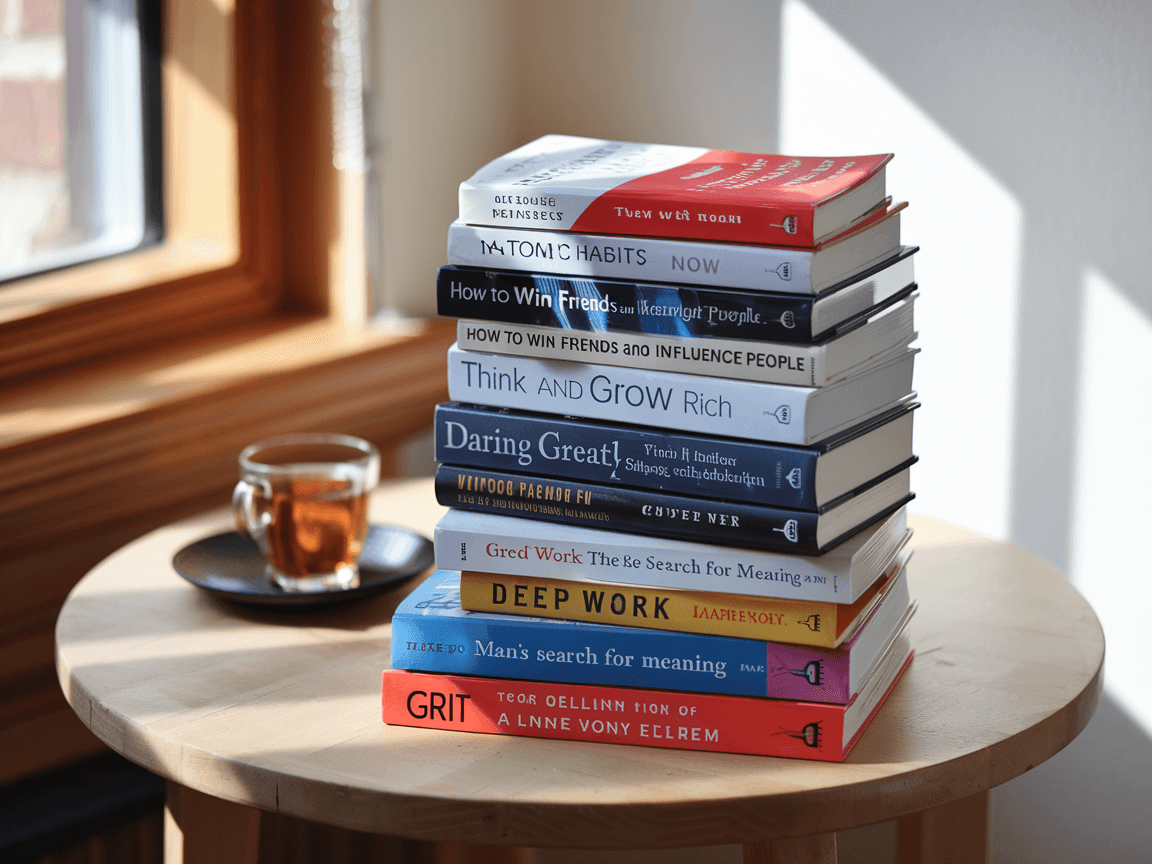
Personal growth isn’t just about dreaming big—it’s about taking action. The right guidance can turn your goals into reality, and that’s exactly what these 10 transformative non-fiction self-help books deliver.
From building better habits and mastering productivity to finding purpose and overcoming challenges, these books are packed with actionable insights and proven strategies. They’ve helped millions worldwide, and now it’s your turn to unlock their wisdom.
Ready to take the first step toward a better you? Let’s explore the books that can truly change your life.
1. “Atomic Habits” by James Clear

Atomic Habits — James Clear
- Make it Obvious — design your environment to cue desired habits.
- Make it Attractive — pair habits with something you enjoy.
- Make it Easy — remove friction to make habits effortless.
- Make it Satisfying — reward yourself to reinforce behavior.
“Atomic Habits isn’t just a book; it’s a toolkit. As I applied its lessons, I realized how small, consistent changes compound into major results.”
2. “The Power of Now” by Eckhart Tolle

The Power of Now — Eckhart Tolle
- Recognizing the “pain-body” — the negative emotions we carry.
- Shifting focus to the present moment instead of past/future dwelling.
- Practices for mindfulness and detachment from the ego.
I found this book profoundly spiritual and practical. The exercises helped me quiet my inner chatter and appreciate life’s simplicity. It’s like a guide to inner peace in a chaotic world.
3. “How to Win Friends and Influence People” by Dale Carnegie (1936)

How to Win Friends and Influence People — Dale Carnegie
- “Give honest and sincere appreciation.”
- “Be genuinely interested in other people.”
- “Let the other person feel the idea is theirs.”
This book is timeless. As someone who struggled with networking, its lessons transformed how I interact with people. It’s a game-changer for both personal and professional relationships.
4. Think and Grow Rich by Napoleon Hill (1937)

“Think and Grow Rich” — Napoleon Hill
- Desire — Define what you want most.
- Faith — Believe in your ability to succeed.
- Persistence — Overcome obstacles with unwavering determination.
This classic taught me the power of visualization and affirmations. It’s not just about money; it’s about aligning your mindset with your goals.
5. “Daring Greatly” by Brené Brown

“Daring Greatly” — Brené Brown
- Cultivating courage by embracing imperfections.
- Building resilience to shame through connection and empathy.
“Daring Greatly” changed how I view vulnerability. It’s not a weakness but a doorway to meaningful relationships and creativity.
6. “Deep Work” by Cal Newport
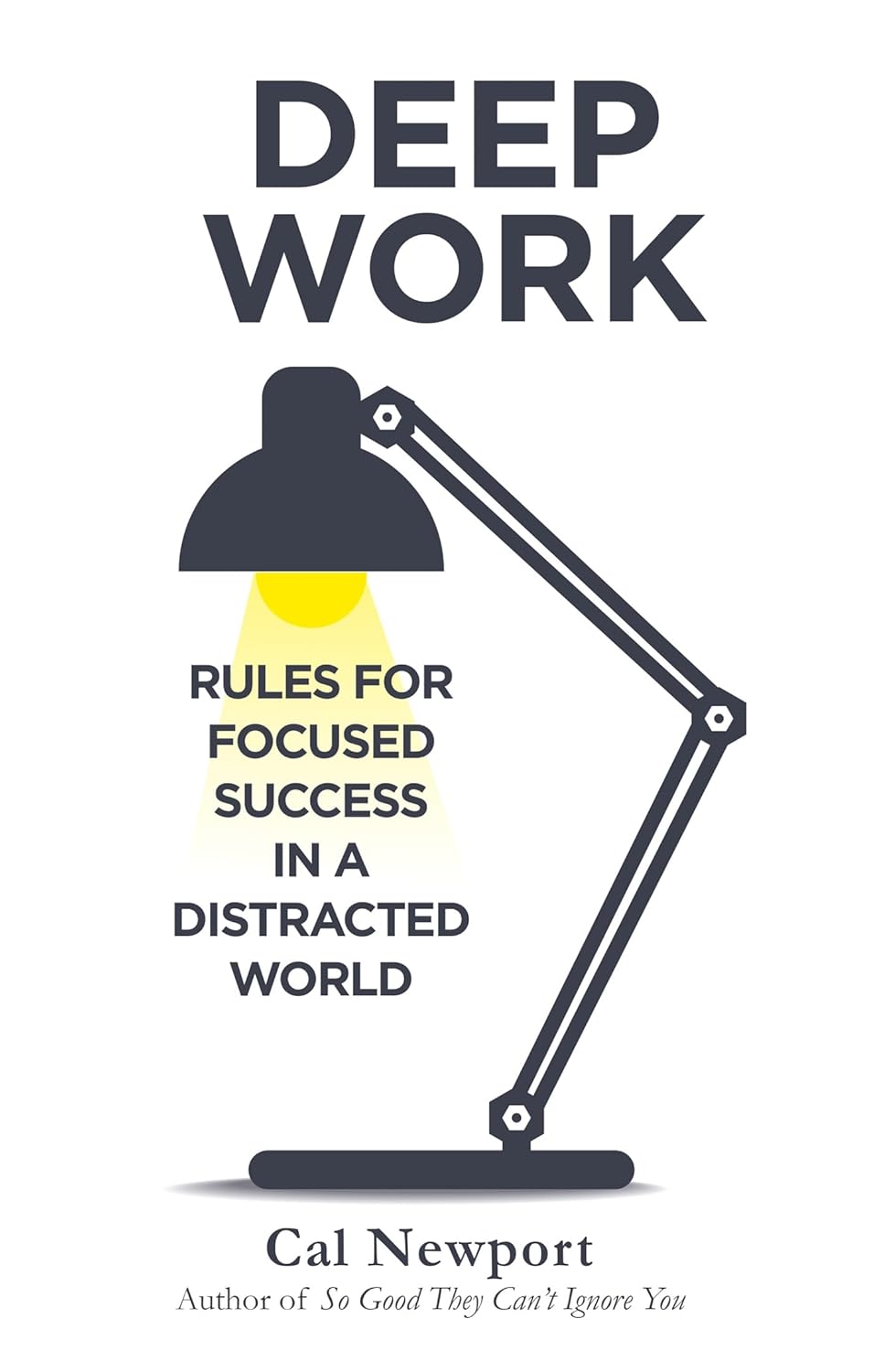
“Deep Work” — Cal Newport
- Work Deeply — Dedicate uninterrupted time to meaningful work.
- Embrace Boredom — Resist task-switching for mental clarity.
- Quit Social Media — Reduce shallow distractions.
This book revolutionized my productivity. By scheduling “deep work” blocks, I’ve been able to achieve more in less time.
7. “Man’s Search for Meaning” by Viktor E. Frankl (1946)

“Man’s Search for Meaning” — Viktor E. Frankl
- Finding purpose even in suffering.
- Taking responsibility for your attitude and actions.
This book is deeply moving. It taught me that no matter the circumstances, we always have the freedom to choose our response.
8. Thinking, Fast and Slow by Daniel Kahneman (2011)

“Thinking, Fast and Slow” — Daniel Kahneman
System 1 (Fast Thinking):
- Operates automatically and quickly with little effort.
- Responsible for intuition and rapid judgments.
- Example: Recognizing a face or completing “bread and…”
System 2 (Slow Thinking):
- Logical, analytical, and effortful thought.
- Used for problem-solving and deliberate decision-making.
- Example: Solving math or comparing financial plans.
Key Concepts:
- Cognitive Biases: Anchoring, loss aversion, overconfidence, and more.
- Prospect Theory: Why losses feel stronger than gains.
- The Halo Effect: How first impressions distort judgment.
“Thinking, Fast and Slow” transformed how I understand my decision-making process. It made me aware of how much of my thinking is influenced by subconscious shortcuts, and it gave me tools to slow down and make better choices. The blend of psychology, economics, and real-world examples kept me engaged from start to finish.
9. “Can’t Hurt Me” by David Goggins

“Can’t Hurt Me” — David Goggins
- The Accountability Mirror: Confront your weaknesses to initiate self-improvement.
- Callousing the Mind: Train yourself to endure discomfort and push beyond limits.
This book is raw and motivating. Goggins inspired me to push past my limits and silence my excuses.
10. “The 7 Habits of Highly Effective People” by Stephen R. Covey (1989)

“The 7 Habits of Highly Effective People”
- Be Proactive.
- Begin with the End in Mind.
- Put First Things First.
- Think Win-Win.
- Seek First to Understand, Then to Be Understood.
- Synergize.
- Sharpen the Saw.
This is more than a book; it’s a life manual. The lessons on prioritization and empathetic listening have profoundly improved my life.
FAQs
Q: Which book should I start with for immediate results?
A: Start with “Atomic Habits” by James Clear. Its actionable framework is easy to implement in daily life.
Q: Are these books suitable for professionals?
A: Absolutely! Books like “Deep Work” and “The 7 Habits of Highly Effective People” are especially valuable for career growth.
Q: How can I implement lessons from these books effectively?
A: Focus on one key takeaway at a time. For example, apply the 2-minute rule from “Atomic Habits” to start small and build consistency.
Q: Are any of these books backed by science?
A: Yes! Books like “Atomic Habits,” “Deep Work,” and “Grit” are rooted in behavioral psychology and neuroscience.
Q: Can I read these books in any order?
A: Yes, though it’s helpful to start with “Atomic Habits” or “The Power of Now” to build a foundation for mindful and disciplined growth.
Which of these books resonates most with your personal growth goals? Let’s discuss your favorite takeaways! 😊

1 Comment
Leave a Comment
You must be logged in to post a comment.


✅ I really enjoyed this roundup — especially how you highlighted that different self-help books resonate at different seasons of life. Atomic Habits was definitely one of those for me. I loved the message, but didn’t actually follow through until I took a free execution quiz through Archetype6 and discovered I’m a Synthesizer. That helped me understand why I kept tweaking systems instead of using them.
Here are 3 takeaways that helped me finally apply what I’d read:
1. I need systems that evolve — too rigid and I stall, too loose and I drift.
2. The Synthesizer-style workbook helped me balance reflection with follow-through.
3. Seeing how others approach progress as an iterative process made me feel less stuck in perfectionism.
I’m still looking for a way to log habits and system changes without making it feel like another “project.” Has anyone found a simple format that keeps track without creating more friction?