
 Madan Chauhan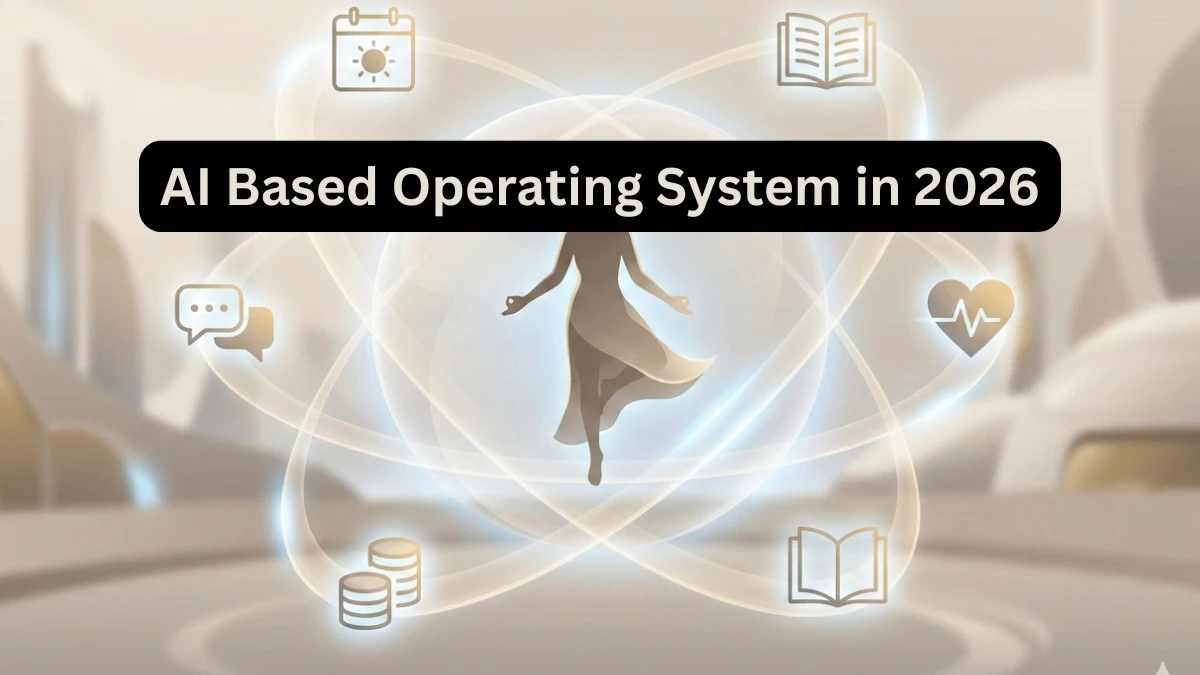
For the last few years, AI has lived inside apps. You opened ChatGPT, typed a prompt, copied an answer, and moved on. Useful—but fragmented.
By 2026, that model breaks.
We are moving toward Personal AI Operating Systems (AI OS): an always-on intelligence layer that understands who you are, remembers what you want, and quietly runs your digital life across devices, apps, and platforms.
This is not another AI tool.
This is AI as infrastructure.
Major ecosystem players like OpenAI, Apple, and Google are all converging on this idea—each from a different angle, but toward the same destination.
This guide explains:
- What a Personal AI OS really is
- Why 2026 is the inflection point
- How it works (in plain English)
- What it will replace
- The risks, ethics, and control issues
- What this means for creators, professionals, and websites like NiftyTechFinds
What Is a Personal AI Operating System?
A Personal AI Operating System is a persistent, cross-platform AI layer that:
- Lives above apps and devices
- Remembers long-term context
- Coordinates tasks autonomously
- Acts on your behalf—with permission
Think of it as:
Your goals + your data + your rules → executed continuously by AI
Unlike chatbots, an AI OS does not wait for prompts. It anticipates, plans, and executes.
Why 2026 Is the Breakthrough Year
1. Persistent AI Memory Becomes Normal
AI systems are shifting from “stateless chats” to long-term memory:
- Preferences
- Past decisions
- Work style
- Personal constraints
Without memory, there is no OS. With memory, AI becomes personal.
2. Autonomous Agents Mature
AI agents can now:
- Break goals into steps
- Use tools (APIs, browsers, apps)
- Verify outcomes
- Retry if something fails
This turns AI from assistant into operator.
3. OS-Level Integration Opens Up
Calendar, files, notifications, payments, camera, email—once AI gets deep OS hooks, the app layer becomes optional.
4. Interface Fatigue Is Real
People are exhausted by:
- Dashboards
- Logins
- Notifications
- App hopping
AI OS solves this by collapsing interfaces into outcomes.
How a Personal AI OS Actually Works (Simple Architecture)
1. Identity Layer – “Who You Are”
This layer defines:
- Roles (creator, manager, student, parent)
- Goals (growth, income, learning, health)
- Boundaries (time, ethics, approvals)
It ensures AI actions align with your values.
2. Memory Layer – “What You Remember”
Two types of memory:
- Short-term: current tasks, conversations
- Long-term: preferences, habits, lessons learned
Example:
If you always reject meetings after 6 PM, the AI OS stops suggesting them.
3. Context Engine – “What’s Happening Now”
Context includes:
- Time & urgency
- Device & location
- Emotional signals (tone, behavior)
Same request, different context → different action.
4. Action Layer – “Doing the Work”
This is where AI:
- Sends emails
- Schedules meetings
- Books services
- Updates documents
- Publishes content
- Manages subscriptions
Always under permission scopes you define.
5. Feedback Loop – “Learning From Results”
If an action fails or you correct it, the system adapts. Over time, it behaves more like you.
What a Personal AI OS Can Run for You
Daily Life Management
- Calendar conflict resolution
- Smart reminders (only when needed)
- Email triage and replies
- Travel planning and rebooking
Professional Workflows
- Research → summary → draft → publish
- Meeting notes → tasks → follow-ups
- KPI tracking and reporting
Financial & Admin Tasks
- Subscription cleanup
- Bill tracking
- Budget alerts
- Renewal negotiations
Learning & Skill Building
- Personalized study plans
- Adaptive quizzes
- Spaced repetition reminders
What This Replaces (Quietly)
By 2026, expect reduced reliance on:
- To-do list apps
- Productivity dashboards
- Manual schedulers
- Knowledge-base tools
They won’t vanish—but they’ll fade into the background.
How This Is Different From Today’s AI Tools
| Today’s AI | Personal AI OS |
|---|---|
| Prompt-based | Always-on |
| Stateless | Memory-driven |
| App-bound | Cross-app |
| Reactive | Proactive |
| You manage | AI manages |
Who Is Building the AI OS Layer?
- OpenAI: Agent frameworks, memory, reasoning layers
- Apple: On-device AI, privacy-first OS integration
- Google: Contextual AI across Search, Android, Workspace
Different philosophies. Same destination.
Risks, Privacy, and Control (Critical Section)
1. Over-Automation
Risk: AI acts too aggressively.
Solution:
- Approval thresholds
- Action logs
- Undo systems
2. Privacy & Surveillance
Risk: AI knows too much.
Solution:
- Local processing
- Encrypted memory
- User-owned data models
3. Behavioral Lock-In
Risk: AI reinforces bad habits.
Solution:
- Periodic “memory resets”
- Intentional preference reviews